


We are living in a culture of “hustle hard”, and “sleep is for the weak”. Somehow, sleeping less and pulling an all-nighter has become a badge of honour.
But lack of sleep makes you weak.
The shorter you sleep, the shorter your life.
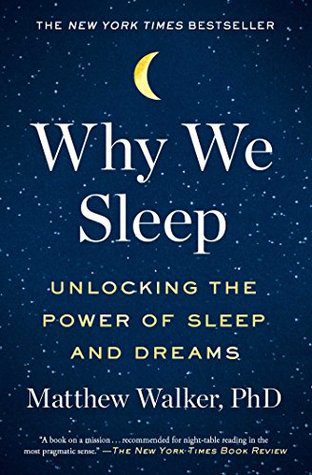
In Why We Sleep, the author Matthew Walker, Sleep Scientist and Professor of Neuroscience and Psychology at Berkeley makes a compelling case for sleep. Sleep is the foundation of diet and exercise:
“I was once fond of saying, “Sleep is the third pillar of good health, alongside diet and exercise.” I have changed my tune. Sleep is more than a pillar; it is the foundation on which the other two health bastions sit.”
Matthew Walker, Why We Sleep
Sleep deprivation is extremely dangerous – lower immunity, failing memory, loss of emotional balance. Not getting adequate sleep also pre-disposes you to serious diseases such as diabetes, obesity and even cancer.
On the other hand, the benefits of sleep are endless. Having enough sleep (~8 hours) is important to allow your body to rejuvenate, consolidate memories, and improve muscle recovery. It also helps in restoring physiological processes in order for your mind and body to function.
We all know this stuff. Often, we don’t take them seriously, and it becomes too late.
After reading this book, and incorporating some changes in my routine, it has made me sleep better, and prioritise sleep over other things.
Here are 5 practical tips from Why We Sleep by Matthew Walker:
1. No caffeine after 3pm
Caffeine has an average half-life of 5 to 7 hours.
Let’s say you drink coffee at 7:30 p.m. This means that by 1:30 a.m., 50% of that caffeine may still be active and circulating throughout your brain tissue. Caffeine tricks our brain into thinking that we are not tired.
How does Caffeine “trick” our brain?
In our brain, there is a chemical called adenosine, which binds to a specific receptor. The main function of adenosine is to make us feel tired.
Caffeine, which has a similar shape to adenosine, can also bind to these receptors. When we consume caffeine, it essentially blocks the binding of adenosine, which stops us from feeling tired.
Thus consume caffeine no later than 3pm for a good night rest. Note that this rule applies to tea and decaf (it does not mean 0 caffeine) as well.
2. Keep it dark
“Just one more episode on Netflix…” “Just another 10minutes on Instagram…” Soon after, it is already 1 a.m. Does this sound familiar?
Often, it is not your fault that you are addicted to our phones and social media. In fact, it is the job of these social media platforms to keep your attention glued to their apps.
Our LED-powered phones and tablets screens emit blue light, which fools our brain into thinking that it is still daytime even though it’s already night
Avoid using screens in the hours before bed. Set a rule for yourself (e.g. No electronics after 10.30pm). If you have to work using your computer, consider phasing out the blue light (e.g. using flux).
Keeping your sleep environment dark also helps you to prepare for bed. Use dark curtains to block light from entering. Switch of the main lights and turn on the small lamp with yellow light instead.
4. Keep it cool
Our core body temperature needs to drop by about 2 to 3 degrees Fahrenheit to initiate good sleep and then maintain deep sleep.
It sounds counter-intuitive, but having a hot bath before bed helps you sleep better.
“the hot bath invites blood to the surface of your skin, giving you that flushed appearance. When you get out of the bath, those dilated blood vessels on the surface quickly help radiate out inner heat, and your core body temperature plummets. ”
Matthew Walker, Why We Sleep
Try taking a hot bath before bed. The drop your the body temperature may help you feel sleepy.
On the topic of temperature, keep your room cool too. Lowering room temperature often helps with insomnia.
3. Stick to a consistent sleeping schedule
Pulled all-nighters during a weekday? Sleeping in on the weekends to repay the “sleep debt” will not help.
Sleep deficits cannot be made up. The long-term effects will come back to haunt you.
The rule is simple: Sleep at the same time, wake up at the same time.
Even during the weekends, try not to deviate too far away from the time you usually wake up and go to bed. Regularity is key.
4. Understand the Circadian Cycle
Our body clock operates in 90-minute sleep cycles. If you wake up in the middle of that cycle, you will feel tired and groggy.
However, waking up in between cycles prevents you from disrupting your sleep cycle. This way you’ll feel more refreshed, and find it easier to get out of bed in the morning.
Find out what is the ideal time you should go to bed if you want to wake up at a certain timing.
One tool I found useful is the sleep time calculator. It basically counts backwards and tells you the ideal time you should sleep, preventing your sleep cycle from being disrupted.
5. Don’t stay in bed awake
For some reason, if you find yourself still awake after lying in bed for more than 20 minutes, get up.
Do some relaxing activity until you start feeling sleepy. The anxiety of not being able to sleep can make it harder to fall asleep.
Summary of 5 Key Tips:
- No caffeine after 3pm
- Keep it dark
- Keep it cool: Take a hot bath before bed
- Understand the Circadian Cycle
- Don’t lie in bed awake
Overall, “Why We Sleep” it is an excellent book on sleep and it is well worth a read. If you are interested in being convinced about the science behind sleep, definitely pick up this book.
Additional resources:
Thank you for taking the time to read my blog.
Enjoying the content so far? I post articles relating to business, investing, personal finance and self-development.
If you are interested in any of these topics, do subscribe to stay updated of new posts.
