Big, old companies are sometimes called ‘dinosaurs’. Slow to think and make decisions, and they do not adapt quickly.
Due to complacency of being at the top, they are often plagued by inaction – which is often the single most dangerous thing. It leads them on the road to extinction.
As Andy Groove puts it, “only the paranoid survive.”
In the tech industry, things are rapidly changing.
Microsoft enjoyed its years of being one of the top players in the industry. But competitors were catching up and they were losing market share. Employees were unclear of the company’s direction and Microsoft lost its soul. And the company needs to “Hit refresh“ and transform its culture.
“Innovation was being replaced by bureaucracy. Teamwork was being replaced by internal politics.”
Satya Nadella, CEO of Microsoft
Then in 2014, things took a turn. Satya Nadella was appointed the new CEO of Microsoft and drove change management throughout the company.
Sataya instilled a “growth mindset” throughout the whole organisation.
He consulted with Carol Dweck, Stanford psychologist and the author of “Mindset” and incorporated themes from her work. Professionals who adopt the growth mindset put in the effort to understand why they failed, and rebound from setbacks quickly (e.g. “I love a challenge”). Whereas those with fixed mindsets believe their successes and failures are inextricably tied to their personal identities (e.g. “I’m not capable enough”).
Posters about having a growth mindset are pasted all around the company walls to remind employees, and it was repeated before meetings by managers. Having a “growth mindset” also ties in with Microsoft’s mission: “To empower every person and every organization on the planet to achieve more.”
Culture eats strategy for breakfast.
A growth mindset is also needed to build a culture of experimentation, to iterate and test ideas. When Sataya took over, his main focus for the first year included preparing Microsoft for a mobile- and cloud-first world.
Brand Dilution
Apart from being agnostic to change, when you expand too quickly, you run the risk of diluting your brand.
New employees you hire might not have sufficient training and experience to deliver the best service quality. It is hard to maintain consistency among all the other stores. And your brand loses its identity.
In 1994, its 23rd year in existence, Starbucks had 425 stores. In 1999 it opened 625 new stores. By 2007, Starbucks opened 3,500 stores per year. To put things into perspective, Starbucks opened a new store every 90 minutes.
The need to achieve growth targets eventually ruled out rational analysis. Same-store sales growth fell by half and the Starbucks experience was being commoditised.
“In order to go from less than 1,000 stores to 13,000 stores we have had to make a series of decisions that, in retrospect, have led to the watering down of the Starbucks experience.” – Howard Schultz wrote a memo to senior management in 2007
Something needs to be done urgently.
Starbucks had to force shut down their stores. In 2008, 600 stores were closed and 12,000 employees were laid off. Starbucks stock fell a staggering 73%, but this change was needed for it to succeed.
Schultz wrote in his 2011 book Onward: “Growth, we now know all too well, is not a strategy. It is a tactic. And when undisciplined growth became a strategy, we lost our way.”
So this begs the question, how can companies scale effectively and create sustainable long-term growth?
The Idea of Slow Compounding
Chamath once puts it, “The faster you build it, that is the half life. It will get destroyed in the same amount of time”.
The idea of slow compounding comes into play when thinking about scaling.
The faster you build something, the faster it dies.
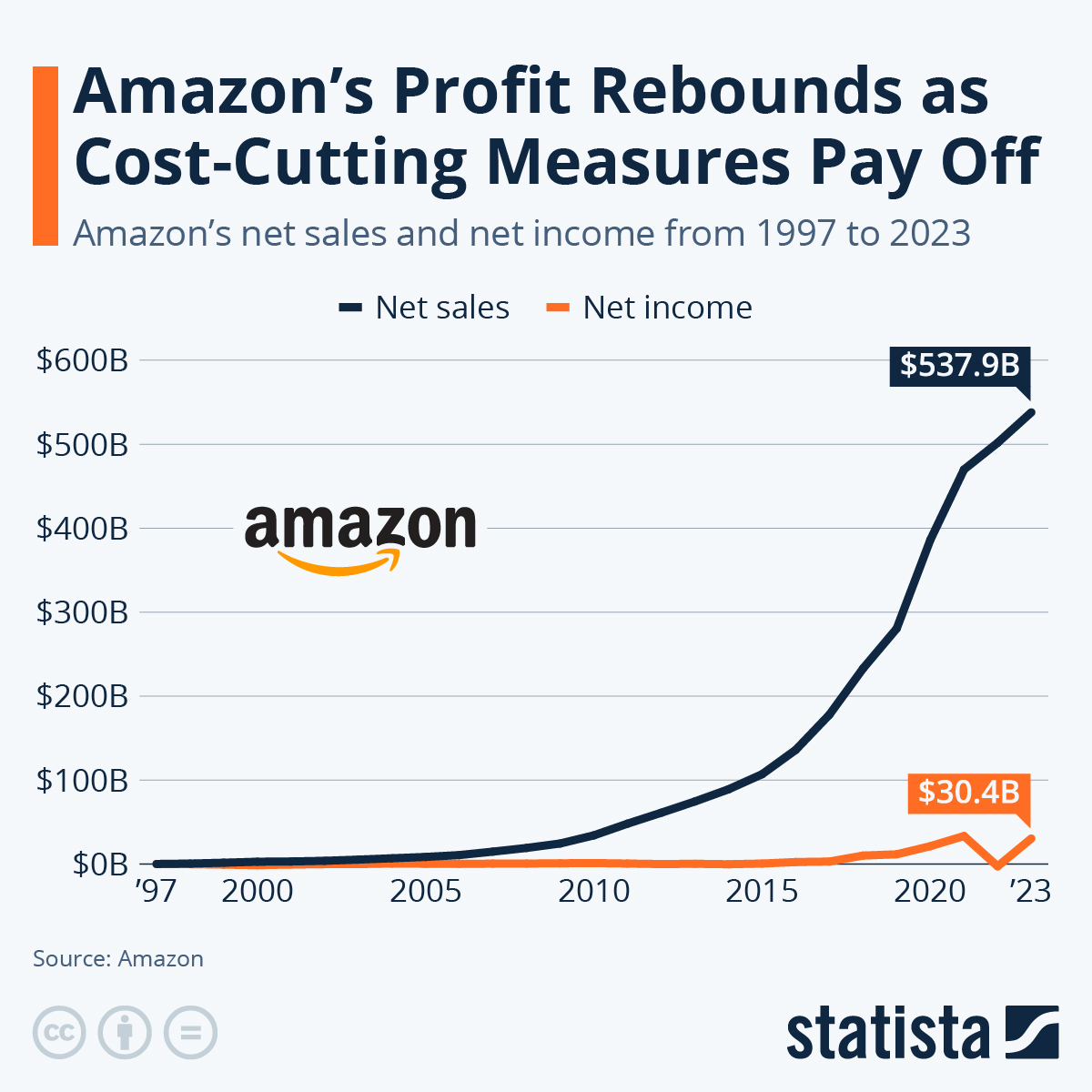
It took Amazon 14 years to take profit. Amazon’s focused on the long-term and continuous reinvested earnings for growth.
The “Day One” mentality is also at the core of Amazon’s culture. Having a start-up mentality and beginner’s mindset even though you are one of the top companies in the world, helps to keep employees grounded and drive innovation (e.g. discovery of AWS).
As the saying goes, “Rome was not built in a day”. Companies that enjoy sustained growth have a culture of growth mindset, and are able to think with a beginner’s mind.
The Lindy Effect

Ever heard of the phrase, “Old is Gold?”.
Similarly, The Lindy Effect states that the longer something has been around, the greater chances that it will survive.
It’s aging in reverse.
For instance, brands such as Hermès and Estée Lauder have withstood the test of time, and remain as one of the strongest few brands in the luxury and FMCG industries respectively.
Companies that have the necessary DNA to incubate new businesses that have the potential to become multi-baggers are called “spawners”. Here is an article on identifying such companies.